
Electrical · Raleigh & the Triangle
Marketing for electricians in Raleigh
An electrician’s advertising problem is that a $150 service call and a $9,000 panel and generator install come from completely different searches, and if they share a campaign the cheap clicks win the budget every time.
The fix is unglamorous: split by job type, price the bids against what each job is actually worth, and read the search term report every month.
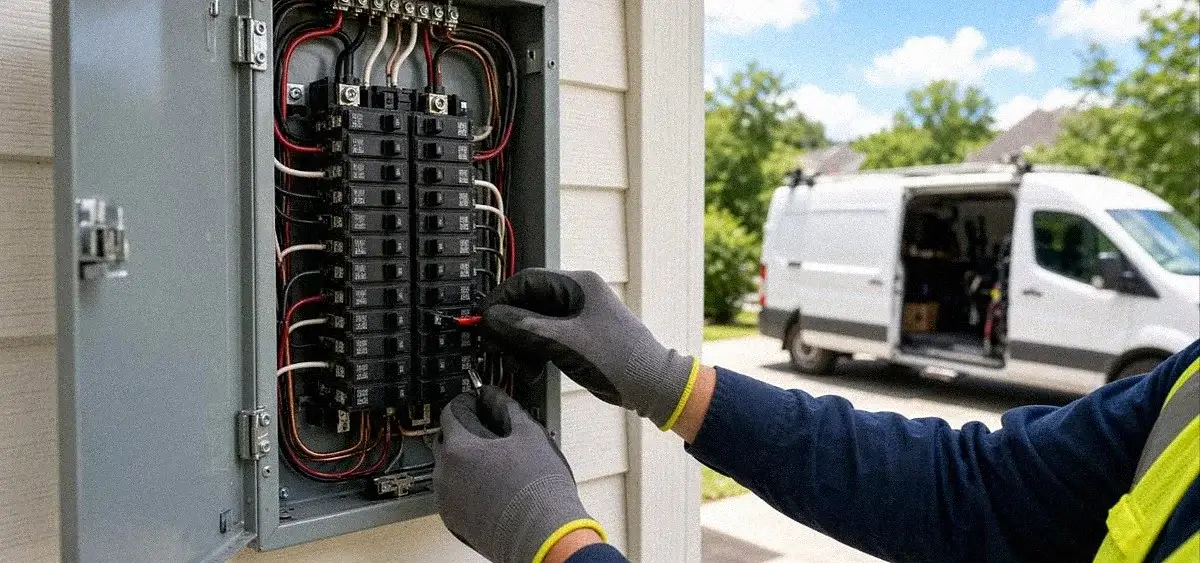
What we run for electrical contractors
Campaigns split by job value. Service calls, panel upgrades, generators and EV charger installs each get their own structure and budget, because they justify wildly different costs per lead.
Negative keyword work aimed at this trade specifically. Apprenticeship, salary, licensing and DIY queries are a constant drain on electrical accounts and they never stop arriving.
Call tracking with dynamic number insertion, so you know which keyword produced the generator inquiry rather than guessing.
Landing pages per job type rather than one services page, on a site you own. A generator buyer and an emergency repair caller need to see completely different things in the first four seconds.
Google Business Profile and reviews, which decide most of the emergency and near-me demand before your website is ever seen.
The number that actually matters
Electrical sits inside home and home improvement in the benchmark data: $8.33 per click, 8.05% conversion rate, $90.92 per lead.
Read that per job type rather than as one number. At $91 a lead, a service-call campaign closing at one in three is marginal. The same $91 lead against a $9,000 generator install closing at one in four is one of the best trades in advertising.
That is the entire argument for splitting the campaigns. One blended cost per lead hides both the campaign you should scale and the one you should stop.
Benchmarks from the WordStream 2026 Google Ads Benchmarks study, an analysis of more than 13,000 search campaigns running April 2025 to March 2026. Local search and review figures from BrightLocal.
How it works
- 1. Discovery. What a booked job is worth to you over their lifetime, what you can afford to pay for one, and which services actually make you money.
- 2. Tracking first. Call tracking and form tracking installed and tested with a real call and a real submission before anything launches.
- 3. Build and launch. Campaigns, pages or print, depending on what we agreed. Ten to fourteen days from kickoff for paid search.
- 4. Manage and report. Monthly, on cost per booked job by job type rather than impressions.

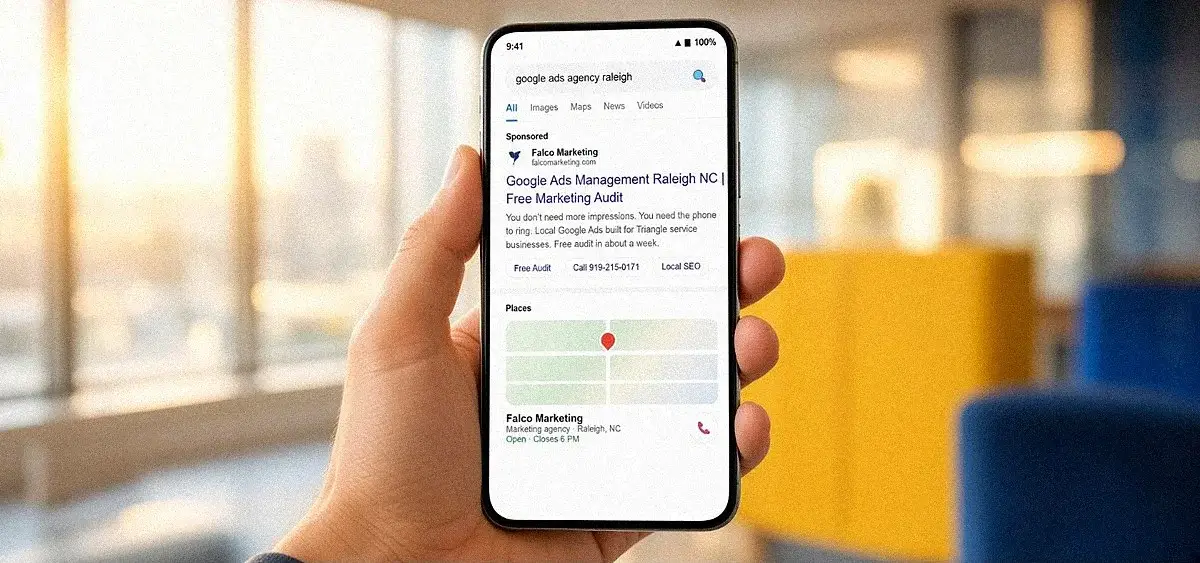
Common questions
Why are my leads all small jobs?
Almost always campaign structure. High-value searches are lower volume and more expensive, so in a shared budget they lose to cheap service-call clicks. Splitting the campaigns fixes it in about a week.
Is generator work worth advertising separately?
Yes, and it is usually the highest-return campaign we build for an electrical contractor. High ticket, considered purchase, and far less competition than emergency repair.
What about EV charger installs?
Growing and worth its own campaign in the Triangle. The buyer researches for weeks, so retargeting matters more here than in your emergency work.
Do I need a separate page for each service?
Yes. One services page trying to convert four different buyers converts none of them well, and it also gives you nothing to rank with.
Who this is for
A good fit: Licensed contractors with capacity for larger installs and a phone that gets answered during business hours.
Not a fit: If you only want emergency service calls at the lowest possible cost, this is more machinery than you need.
Book a 20-minute call
You tell us what’s going on, we tell you whether we can help, and if we can’t, we usually know who can. No pitch deck.
Services: Google Ads · Local SEO · Website design · Design & print · All industries