
Pest Control · Raleigh & the Triangle
Marketing for pest control companies in Raleigh
Pest control sells two things that look similar and behave nothing alike. A one-time treatment is an urgent, low-consideration purchase. A recurring plan is a subscription with real lifetime value. Selling them through one campaign means you optimise toward whichever is cheaper to acquire, which is almost always the wrong one.
Demand here is also seasonal and shaped by neighbourhood, which makes this one of the few categories where print and digital genuinely multiply each other.
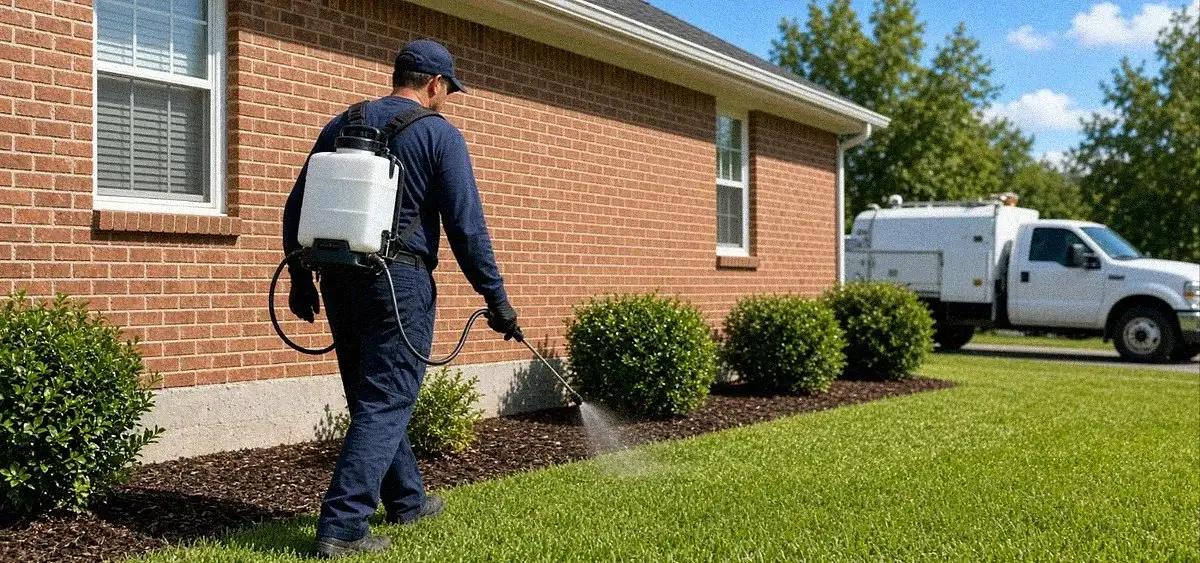
What we run for pest control companies
Separate campaigns for one-time and recurring. Different landing pages, different offers, different targets, so the plan sales are not buried inside an average.
Seasonal budget shaping. Ant, mosquito, termite and rodent demand peak at different points in the year, and the budget should move with them rather than sit flat.
Neighbourhood targeting that matches your routes. ZIP and radius targeting built around where your technicians already are, because route density is most of your margin.
Door hangers and EDDM in the streets you just treated, designed and printed in house, paired with a Nextdoor campaign in the same neighbourhood the same week.
Review requests wired into job completion, which feeds the map pack where most of this demand is actually resolved.
The number that actually matters
Pest control sits inside the home and home improvement category in the benchmark data: $8.33 per click, an 8.05% conversion rate and $90.92 per lead. Clicks run roughly 54% above the all-industry average.
That number is only useful once you split it. A one-time treatment lead and a recurring plan lead can cost the same to acquire and be worth ten times different amounts over three years, which is why cost per lead is the wrong headline metric here.
46% of consumers add “near me” to local searches. In a route-based business that is not just demand, it is demand with a geography attached, and the map pack is where it gets settled.
Benchmarks from the WordStream 2026 Google Ads Benchmarks study, an analysis of more than 13,000 search campaigns running April 2025 to March 2026. Local search and review figures from BrightLocal.
How it works
- 1. Discovery. What a recurring plan customer is worth to you over their lifetime, what you can afford to pay for one, and which services actually make you money.
- 2. Tracking first. Call tracking and form tracking installed and tested with a real call and a real submission before anything launches.
- 3. Build and launch. Campaigns, pages or print, depending on what we agreed. Ten to fourteen days from kickoff for paid search.
- 4. Manage and report. Monthly, on cost per recurring plan sold rather than impressions.

Common questions
Should I advertise year round?
Yes, but not at a flat budget. Demand is seasonal by pest type and the spend should follow it. Going dark entirely costs you the recurring-plan sales that happen in shoulder seasons.
Do door hangers actually work in this category?
They are one of the best-performing pieces we print, particularly in the streets around a job you just completed. Neighbours notice the truck, and the hanger gives them a reason to act.
How do I sell more recurring plans instead of one-offs?
Advertise them separately, land them on their own page, and lead with the annual cost rather than the per-visit cost. Most companies bury the plan as an upsell on a one-time page and then wonder why the mix is wrong.
How fast can this start producing?
Paid search produces calls in days. Print lands on a one to three week cycle. Local SEO and reviews run underneath on a six month horizon.
Who this is for
A good fit: Established companies with technician capacity and defined routes, especially those trying to shift the mix toward recurring plans.
Not a fit: Companies wanting the cheapest possible lead regardless of what it turns into. That optimises straight toward one-time work.
Book a 20-minute call
You tell us what’s going on, we tell you whether we can help, and if we can’t, we usually know who can. No pitch deck.
Services: Google Ads · Local SEO · Website design · Design & print · All industries