Everything below is built and run in house. Most clients start with one service and add others as they see what works. Nothing here requires you to buy the rest of the list, and we’ll tell you which one to start with if you’re not sure.
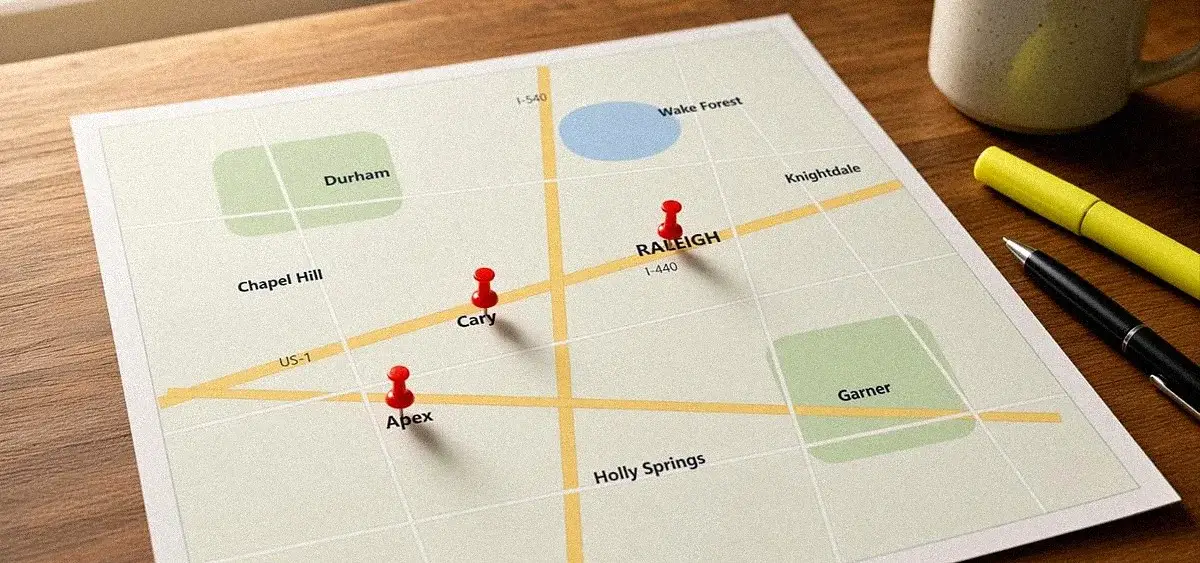
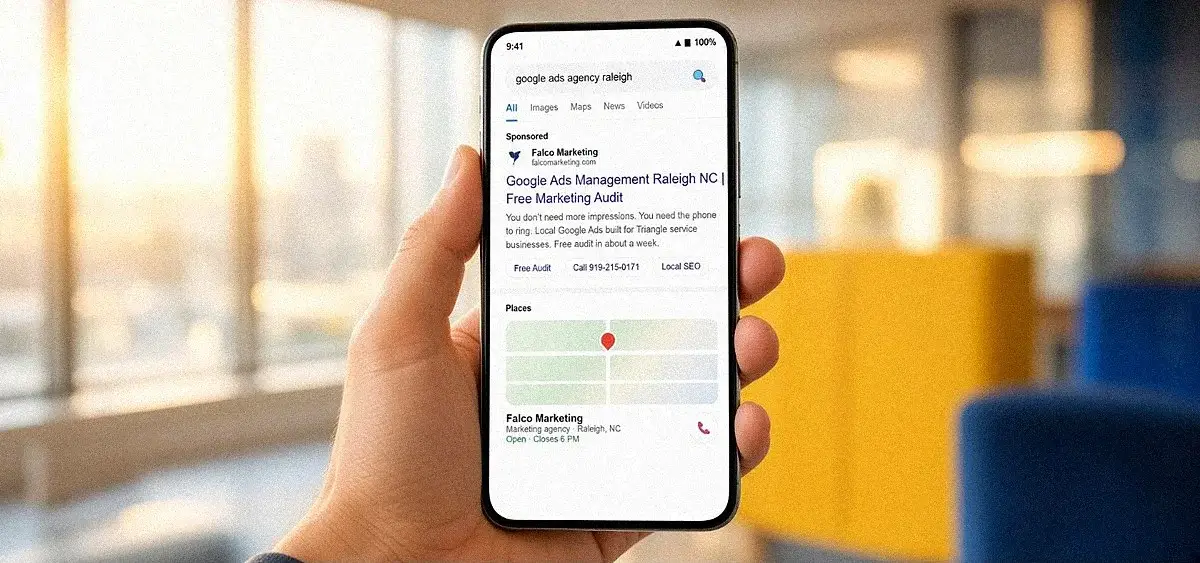
The two services that carry roughly ten times the local search volume of the phrase “marketing agency.” If you only do two things, do these.
Website Design. Fast, mobile-first sites with technical SEO built into the build rather than quoted back to you as phase two. We map the site before anyone opens a design tool: what each page targets, what each page’s one job is, and how someone gets from landing to phone call in as few steps as possible. Pages are server-rendered, which matters more every month because most AI crawlers don’t execute JavaScript and can’t read a site that only assembles itself in the browser. Core Web Vitals get tested before launch, schema goes in, and a full 301 redirect map ships on day one so the rankings you already have survive the move. You own the domain, the hosting and the logins. Website design in Raleigh
SEO & Google Business Profile. Local search has two halves. The map pack is decided almost entirely by your Google Business Profile, your categories and your recent reviews. The blue links underneath are decided by your website. Most SEO proposals only address the second one, which is why they feel slow. We start with the profile because it moves faster and because for a local service business that’s where the volume is: category testing, a keyword-matched services list, a review request system that won’t get you throttled, citation cleanup, and grid-based rank tracking so you can see where in the city you actually show up. SEO and Google Business Profile
Twenty minutes on the phone will sort it.
Paid channels, for when the pipeline needs to move this quarter rather than in six months.
Google Ads Management. Search, Shopping, YouTube and Performance Max campaigns built to produce calls and booked jobs rather than clicks. Conversion tracking and call tracking go in before a dollar gets spent, tested with a real phone call and a real form submission, so you can see which keyword produced which conversation. After that the work is unglamorous and it’s where the money is: monthly search term review, negative keyword maintenance, and the conversation where we tell you the ads are fine and the landing page is the problem. Also called PPC management or search engine marketing, depending on who you ask. Google Ads management
Social Media Advertising. Paid campaigns on Facebook, Instagram and Nextdoor, with the creative made in house because on social the creative carries almost all the weight. A search ad answers a question someone just asked; a social ad has to interrupt someone who wasn’t asking anything. Nextdoor in particular is the closest thing to buying a neighborhood referral, and fewer Triangle businesses are bidding there than you’d expect. Three to five creative variations at launch, retargeting properly configured, and new creative every six to eight weeks because social creative fatigues. Social media advertising
The things that make the advertising work harder, and the things that keep working when the ads are off.
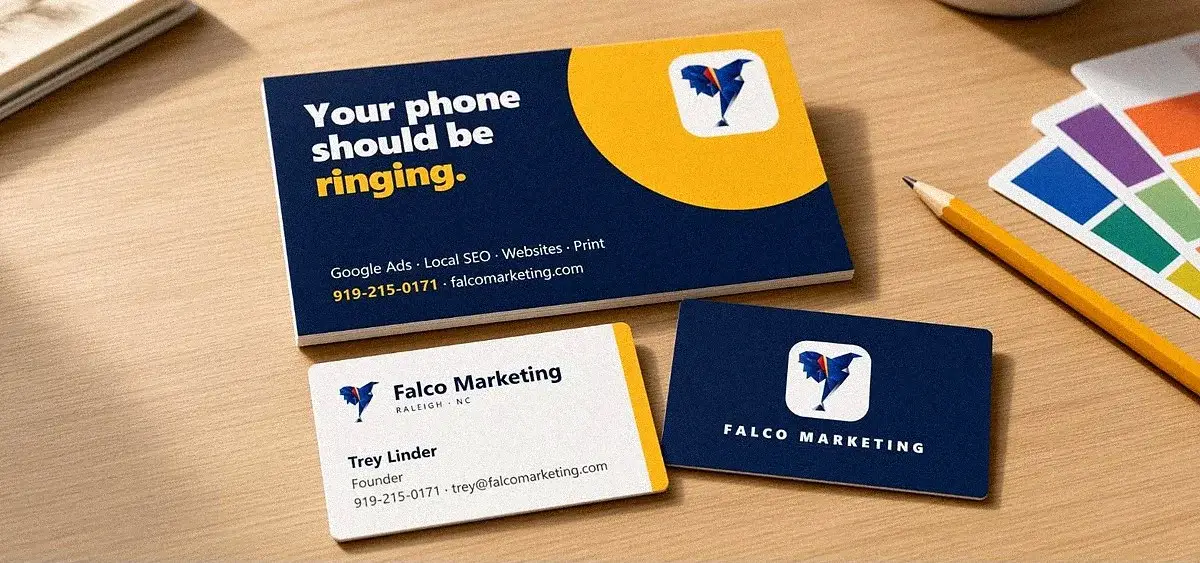
Graphic Design & Print. Logos, full identity systems, and the printed pieces that go with them. Most design firms hand you a PDF and a printer’s phone number; what happens next is your problem, and then the blue on the door hanger isn’t the blue on your truck. We design it and we print it, so there’s one accountable party and the color matches. Brochures, sell sheets, door hangers, EDDM direct mail, yard signs, banners and branded apparel. Graphic design and print
AI Agents & Automation. The version of this with no hype in it. There are three or four specific places a small service business loses money every week and most of them are fixable with automation that’s been reliable for years: the call nobody answers after five, the missed call that never gets returned, the lead sitting in an inbox for a day, the customer who would have left a five-star review if anybody had asked. An AI receptionist that books at 9pm, missed-call text-back, lead routing into your CRM, follow-up sequences and automated review requests. AI agents and automation
Blog Writing & Posting. Most blog services send you a document that sits in your inbox for three weeks. We publish it: researched, written from a fifteen-minute monthly call with you, formatted with real question-and-answer structure, internally linked to the service page it should feed, and live. You get a URL, not a draft. Posts run as long as the answer requires, which is usually well under 2,000 words, because the correlation between word count and getting cited by AI search is close to zero. Blog writing and posting
Recruitment Marketing & Hiring Ads. A job posting is an ad, and most job postings are bad ads: a copy-pasted duty list, no pay range, and an application that takes eleven minutes on a phone. We rewrite it, run it on Indeed and ZipRecruiter, automate the screening, make first contact within minutes of someone applying, and book confirmed in-person interviews straight onto your calendar. We don’t source candidates — that’s a search firm and a different fee structure — and we’ll tell you when a role needs one. Hiring ads and applicant management
The reason to have these under one roof isn’t a discount. It’s that they inform each other.
Your Google Ads search term report is the single best keyword research document you’ll ever own, because it’s real queries from real buyers in your actual service area, with conversion data attached. That feeds the blog topics and the local SEO plan. It costs nothing extra, and an agency that only runs your ads will never hand it to your SEO vendor.
Your website is where the ad traffic lands, so the people running the ads should have a say in how the pages are built. When those are two different companies, the conversation about why the landing page converts at 2% turns into a blame exchange.
Your brand system is what every one of these has to look like. If the door hanger, the Google ad, the careers page and the website look like four different companies made them, that’s because four different companies did.
There isn’t a contractual minimum after the initial build, because we work month to month. There is a practical one: if the management fee would eat most of your budget, you’re better off spending that money elsewhere and we’ll say so on the first call rather than four months in.
Often, and a Google audit is usually how that starts. You send read-only access, we send back a written document, and you decide what to do with it. Sometimes the honest answer is that your current agency is doing fine.
Usually yes. Sometimes the right answer is to rebuild rather than inherit, and the audit tells you which one you’re looking at. Either way the account stays in your name.
Discovery within a week of the first call. For paid search, tracking goes in during days one to five and campaigns launch 10 to 14 days from kickoff. Design and print depend on the piece. A website is a longer build and we’ll give you a date in writing before it starts.